Showing posts with label Ethnic cooking. Show all posts

Friday, January 13, 2012

Coming Back to Reality: Chana Masala

Posted by Nichole Leigh


Hi Readers!  I hope that 2012 is already proving to be an exceptional year! After a much needed blogging break, I'm ready to hit the ground running! Er.... that is to say, hit the keyboard typing?

Anyway, J and I spent the holidays in Long Island with his family, and Oh My God did we eat! A lot. Every single day. Excessively, even. J's mother (who originally hails from an island off the coast of Italy) is some sort of seafood Goddess. She goes to the fish market nearly every day and haggles with the fishmongers (in Italian, of course) to secure the freshest seafood available. In the ten days that we stayed with J's family, I consumed fresh clams three times, octopus (yes!) twice, mussels twice, calamari, oysters, and god knows how many types of fish. The whole experience was incredible and we had a great time.

But, since we've returned to our little Pittsburgh apartment, I've barely cooked anything. We've been home for twelve days, and I have only cooked dinner once. So what have we been eating? Raw fruit, vegetables, and bread. The fare has been a bit simplistic, but I think we needed a break from complicated, multi-course meals.

Cooking exhaustion aside, I wanted to share the most recent thing I prepared for dinner: this simple, quick, and super satisfying Channa Masala, or Chickpea Curry. If your kitchen is stocked with Indian spices, this is a particularly easy dish to throw together. The whole thing takes about 20 minutes.

Channa Masala - Chickpea Curry
This recipe was adapted from Neelam Batra's 1000 Indian Recipes. I usually serve this dish with rice because it's a pretty soupy curry, but you can certainly eat it with chapati or naan too (if you have a Tandoor oven, that is!) The recipe features the use of canned chickpeas, which is not exactly authentic, but the curry is still delicious.
Photo Courtesy of Hookedonheat.com. View the original here. (I left my camera charger in NY - working on getting it back)

Ingredients
1 small onion, coarsely chopped
1 fresh green chili peppers, such as serrano, stemmed
3 cloves fresh garlic, peeled
1 quarter-sized sliced peeled fresh ginger
2 large tomatoes, coarsely chopped
2 tablespoons vegetable oil
1 teaspoon cumin seeds
1 teaspoon ground coriander
1 teaspoon Garam Masala + 1/4 teaspoon for garnish
1/4 teaspoon ground turmeric
1/4 teaspoon ground paprika
1 tablespoon fresh lime juice
1/4 cup plain soy milk whisked with 1/2 teaspoon cornstarch or arrowroot  
1 can chickpeas (also known as garbanzo beans)
1/2 cup finely chopped fresh cilantro, including soft stems

Directions
1. In a food processor or a blender, combine the onion, green chili peppers, garlic, and ginger to make a paste. Remove to a bowl, then purée the tomatoes.

3. Heat the oil in a small nonstick saucepan over medium-high heat and add the cumin seeds; they should sizzle upon contact with the hot oil. Quickly add the onion, garlic, chili pepper, and ginger paste and cook, stirring over medium heat until browned, about 5 minutes. Add the tomatoes and cook until the juices evaporate, about 7 minutes.

4. Add the coriander, garam masala, turmeric, paprika, and lime juice, then add the soy a little at a time, stirring constantly.

5. Mix into the chickpeas and simmer about 15 minutes to blend the flavors. Add more water for a thinner curry.

6. Transfer to a serving dish, mix in the cilantro and the remaining garam masala, and serve.


Saturday, December 3, 2011

Garlicky Quinoa with Roasted Cashews, Green Onions and Raisins: Vegan Friday Post #2

Posted by Nichole Leigh

As promised, here are the recipes for the delicious Garlicky Quinoa and Baked Sweet Potato Wedges that I mentioned yesterday. But before I dive in, I'd like to discuss the value of quinoa as a vegetarian food staple. I think that most foodies and veg heads are probably already familiar with this wonderful South American grain, but there's no harm in rehashing its virtues, right? 

Quinoa is native to the Andes Mountains of Bolivia, Peru and Chile, and has been eaten for over 5,000 years by the people of that region. It was a staple food for the Incas, and continues to be a valuable food source for their descendants. 

This lovely little grain is 100% gluten free, contains a higher protein content than any other grain, and boasts broad protein profile which resembles that of casein. Thus, it is considered a "complete" protein. Additionally, quinoa is chock full of great vitamins and minerals like calcium, phosphorus, magnesium, potassium, iron, copper, manganese, and zinc. Basically, it's a superfood. 

Quinoa is easily prepared in the same fashion as rice or other grains like barley or amaranth. It can also be ground into flour and used as a starch extender in breads and pastries. For more information about the quinoa, visit the Purdue University Center for New Crops and & Plant Products Quinoa Page.For lots of quinoa recipes,  visit CookingQuinoa.net

Finally, yours truly thinks that quinoa has a lovely taste and texture. It's incredibly wholesome, and if you haven't tried it yet, I think now's a good time! To get your started on your quinoa journey, here's a quick and delicious concoction that I whipped up last night for Vegan Friday! 

Garlicky Quinoa with Cashews, Green Onions, and Raisins
This is just one of the many endless ways to prepare this delicious grain. The recipe is rather basic, so don't be shy about trying out other ingredients combinations.

Ingredients
1 cup quinoa, rinsed
1 3/4 cup warm water
1/4 cup raw, unsalted cashews
2 tablespoons olive oil
2 cloves of garlic
1/4 cup raisins
1/3 cup green onions, chopped
1 tablespoon lemon juice
salt and pepper to taste

Directions
1. Toast the quinoa in a medium saucepan until it browns, about 2 minutes
2. Add the water to the quinoa, and bring the water to the boil. Reduce to low and simmer until all the water is absorbed, about 15 minutes. 
3. In the meantime, roast the cashews in a small skillet until they begin to brown. Remove and set aside. 
4. Add the olive oil and garlic to the skillet. Cook the garlic until it begins to brown on each side. 
5. Remove the garlic from the oil, and set aside with the cashews.
6. Combine the raisins and green onions and set aside.

7. When the quinoa is finished, allow to set for 2 minutes, and then fluff with a fork. Add the cashews, garlic, raisins, green onions, lemon juice, salt and pepper.
8. Serve warm and enjoy! 


Friday, December 2, 2011

Falafel with Sweet-Tahini Sauce: Vegan Friday Post #1

Posted by Nichole Leigh

As you may surmise from the title of this post, I'm back with a fury! I've really missed writing on Veggie Horizons, so I thought I'd (re)open with a bang. J and I have decided that we eat more cheese than is probably normal or healthy, so we're trying to cut down a little. We don't really consider this change restrictive. It's just a chance to try more vegan recipes!


Anyway, welcome to Vegan Friday! This week's installment features Falafel Patties with Sweet Tahini Sauce, Garlicky Quinoa, and Baked Sweet Potato Wedges. Looks good, huh? For tonight, I'm just going to post the Falafel and Sweet Tahini Sauce recipe, but I'll follow up with the other recipes tomorrow. Stay tuned!

Falafel with Sweet Tahini Sauce
Falafel is generally a mixture of dried chickpeas, herbs, and spices, combined with liquid to make patties (though I have seen some use fresh chickpeas). I make my falafel patties with a dry falafel mix that I get from a wonderful Turkish grocer in Pittsburgh. The proprietor makes the mix himself, and can vouch for its wholesomeness.

If you would like to make your own falafel mix from scratch, I recommend this recipe from the Iraqi food blog, It's Sooo Good. The following describes how to form the patties, followed by the recipe for the sweet-tahini sauce.
This recipe makes three falafel patties and three servings of the sweet tahini sauce. Falafel is traditionally fried, but I brown mine own both sides and throw it in the oven for a lighter version. 

Falafel Ingredients
3/4 cup dry falafel mix
1/4 cup warm water
1 teaspoon olive oil

Falafel Directions
1. Preheat the oven to 300F. 
2. Mix together the dry falafel and warm water until the ingredients form a firm batter. Add more water, as necessary, to keep the batter moist. If you don't use enough liquid, the patties will become hard. The mixture should just be able to hold its shape when formed into balls.

3. Divide the batter into three portions, and it into balls. Press each ball with your palm until it forms a patty like the one pictured below.(Wet your hands with a little water if the batter is too sticky.)
4. Heat the olive oil in an oven-proof pan on medium-high. Lay the patties in the pan and allow to brown on each side, about 3 minutes.
5. Put the pan in the oven for another 5-7 minutes to finish cooking the patties. Remove from the oven. They're ready to serve!

Sweet Tahini Sauce Ingredients
2 tablespoons Tahini
2 teaspoons lemon juice
1 teaspoon agave nectar (or honey for a non-vegan version)
1/2 teaspoon dijon mustard

Sweet Tahini Sauce Directions
1. Combine all ingredients. Spoon onto cooked falafel patties. Top with avocado and tomato.


Check back tomorrow for the Garlicky Quinoa and Baked Sweet Potato Wedges! Happy friday! 

Sunday, October 23, 2011

Pizza for the People


Do I really need to say anything in praise of pizza? I think not. Just look at it!


But this is a blog full of writing, so I will say a few words in praise of my boyfriend's pizza making abilities. J is a transcendent pizzaiolo, and I'm not exaggerating. Around my house, we use J's pizza as currency. We use it to bribe people, to impress new friends, and to secure our spot in the Foodie Social Hierarchy.


J's culinary masterpieces are descendant from the Neapolitan tradition (his mother's legacy), and occupy the perfect middle-ground between thick and thin crust pizza. His pies are neither greasy nor watery, and somehow manage to be satisfying without being guilt-inducing. It's a staple and a necessity in our kitchen.


So, I'd like to offer up some general pizza-making tips, J's standard pizza recipe, and some thoughts on topping the perfect pie (including delicious vegan combinations).


Pro-Pizzaiolo Tips: Flour, Stones, and Simplicity
  • In pizza, as in bread, the flour is everything. Generally speaking, use the highest quality flour you can afford. (King Arthur brand produces consistently high quality flours and are readily available throughout the country.) It is more than possible to make pizza with 100% whole wheat crust, but whole wheat flour has lower gluten (and thus the dough has less elasticity and is harder to stretch), so J prefers to use a combination of white and white whole wheat flours. His perfect ratio is 4:1, white flour to white whole wheat flour.
  • You need pizza stones to make great homemade pizza. There's no getting around it. You can get affordable pizza stones at stores like Bed Bath & Beyond for about $15/stone. Obviously, if you want to spend a bundle ($50+/stone) you can, but my $15 stones have been doing a fabulous job for years.
  • Keep your recipes and ingredients simple. When making homemade pies, the fresher the ingredients the better. The goal of homemade pizza should be balance, not decadence. The dough, sauce, and toppings should compliment each other. There's no need to use overly complex recipes to achieve incredibly delicious results. Each of your ingredients should be able to shine without overpowering the others. 

J's Basically Amazing Pizza: Dough, Sauce, and Toppings
These basic, no-frill recipes never fail to drop jaws and win friends. Good luck!

Basically Amazing Pizza Dough (Makes Two - 16'' Pizzas)
Ingredients:
  • 4 cups unbleached white flour
  • 1 cup white whole wheat flour
  • 2 tablespoons dry yeast
  • 1/2 teaspoon salt
  • 2 1/2 cups warm water
  • Cornmeal for sprinkling on the pizza stones
Directions:
  1. Preheat oven to 450ºF, with the pizza stones inside. 
  2. Mix the flours, yeast, and salt in a large bowl. Add the water (for accurate measure of water temperature, see the Basic Bread Recipe), and mix until the dough begins to firm up.
  3. Turn the dough out onto a flat, floured surface, and knead with your hands until the dough becomes smooth and elastic, about 10 minutes.

  4. Return to the bowl, and allow to raise for 30-45 minutes, or until the dough doubles in size.
  5. Roll out the dough onto a floured surface, and knead for another 5-10 minutes, making sure that there are no air bubbles in the dough.
  6. Split the dough into two even balls, and set one aside. You are about to shape your pizza!

  7. The following video demonstrates how to form your pizza shell. J- narrates for your convenience!Written directions follow. 

  8. Press the dough down with your fingertips, starting in the center and working outward toward the edges.
  9. Stretch the dough in this manner until it is about an two inches wider in diameter than the pizza stone you are using

  10. Sprinkle cornmeal on the pizza stones to prevent sticking. Gently lift the dough and place onto the pizza stone. Do not press down on the dough while it is on the stone or else the cornmeal will sink into the dough, and the pizza will stick to the stones.
  11. Fold the edges over and pinch them together, forming the crust.
  12. Use a large spoon to spread the Basic Pizza Sauce (recipe follows)  onto the pizza shells. Add the toppings (suggestions follow) of your choice (except the fresh mozzarella if using).
  13. Repeat with second pizza, and place in the oven. Allow to cook for about 15 minutes.  Remove the pizzas from the oven, top with fresh mozzarella cheese if using, and return to the oven, rotating the pies between the top and bottom rack.
  14. Return and continue to cook for another 5-10 minutes, or until the pizza crust is thoroughly brown and the cheese is melted.
Basically Amazing Tomato Pizza Sauce ( Makes enough for Two - 16'' Pizzas)
Ingredients:
  • 24 ounces canned tomatoes, crushed or diced
  • 2 tablespoons extra-virgin olive oil
  • 1 tablespoon dried oregano
  • 3 cloves garlic, chopped
  • 1/4 teaspoon salt
    Directions:
    1. Place all ingredients in a blender and pulse a few times until the tomatoes are blended to your taste. Alternately, if you prefer a chunkier sauce, place ingredients in a bowl and mix with a large spoon until the ingredients are fully incorporated.
    2. Spoon onto the pizza shells as described in Step 12 of the Basic Pizza Dough Recipe.
      Toppings: Options Abound! 

      Red Bell Pepper and Kalamata Olive Topping - Before Mozzarella 
      The possible topping combinations are almost endless, but the following are some of my favorite vegetarian combos. All are delicious when paired with the Basic Tomato Pizza Sauce, but are also good with a simple white sauce of olive oil, oregano and salt:
      • Basil and Fresh Mozzarella (the classic Margherita Pizza)
      • Spinach, Gorgonzola/Blue cheese/Feta, and Fresh Mozzarella
      • Sliced Baby Portobello Mushrooms, Pepperoncini, and Fresh Mozzarella
      • Roasted Red Peppers, Red Onions, and Fresh Mozzarella
      • Kalamata Olives, Pineapple, and Fresh Mozzarella
      • Marinated Artichoke Hearts, Blue Cheese, and Fresh Mozzarella
      • Roasted Garlic, Fresh Tomato Slices, and Fresh Mozzarella
      • Sun dried Tomato, Pesto, and Fresh Mozzarella
      If you're vegan, you don't need to feel left out on pizza night. You will be very surprised at how delicious these pizzas taste without cheese. You don't even need it! (In fact, one traditional Neapolitan pizza is cheese-less, and topped with tomato sauce, garlic, anchovies. However, J doesn't like anchovies so we've been topping it with just tomato sauce and garlic since long before veganism or vegetarianism even entered into our lifestyle.) Here are some awesome cheese-less topping combinations:
      • Roasted Garlic and Basic Tomato Pizza Sauce
      • Pine Nuts, Pesto, Artichoke Hearts, Olive Oil, and Oregano
      • Kalamata Olives and Roasted Peppers, and Basic Tomato Pizza Sauce
      • Sliced (Cooked) Potatoes, Rosemary, Diced Red Onions, Olive Oil and Oregano
      • Portobello Mushrooms, Red Onions, and Basic Tomato Pizza Sauce
      • Caramelized Onions, Sun-Dried Tomatoes, Arugula, Olive Oil and Oregano

      Wednesday, October 12, 2011

      Bento Baby: My First American Bento


      I have a new obsession! While perusing cookbooks on Amazon, I stumbled across a book entitled Just Bento, by Makiko Ihto and the associated blogs: Just Bento and Just Hungry. I am a sucker for cover art, and this cookbook mesmerized me: cute, color-coordinated, and veggieful! So, of course, I bought it immediately.

      The purchase is indicative of more than just my impulsive spending habits, however. A quick glance at the product description and Ihto's blogs reminded me of a few important things:
      1. I have a stash of under-utilized Japanese ingredients residing in my pantry,
      2. I have terrible lunch-packing habits ,
      3. It would be fun to make nutritional lunches every day, and
      4. Veggie Horizons is seriously lacking in lunch recipes (probably because of #2)

      So, I've decided to jump on the bento bandwagon and make it happen!

      But First, What is Bento?
      According to Ihto, bento is simply a meal served in a box. There is a long and storied tradition of bento in Japan, but I think that I should let the experts tell you about the history and philosophy of bento-making, rather than trying to appropriate a tradition that I may not fully understand. 

      So, with a nod to my cultural limitations, it seems that most anything can be a bento box, or go inside of a bento box. Personally, bento-making appeals to me because the process places an emphasis on utilizing a variety of textures, colors, and techniques to make a highly nutritious and attractive lunch. The concept of constructing a satisfying meal while incorporating many different vegetables is enticing to me, since I rarely eat an honest lunch as it is. Furthermore, one has to fit all of one's lunch into a relatively small container (See this article to help you determine what size of bento box is right for you), helping to control portion size. What could be healthier (physically and psychologically) than a vegetable-based lunch that's compact enough to fit comfortably into your purse? Nothing.

      Photo courtesy of: A Basic Bento in 20 Minutes - JustBento.Com

      Besides, making bento looks so darn fun!

      Note: Ihto discusses at length something called "Charaben" or "Cute Bento," which are elaborately decorative bentos made by competitive Moms and Bento Artists. Though I am certainly in love with such culinary craftiness, I highly doubt that I will have time to make anything like this before work in the morning.

      My First Bento
      Well, here it is! I know it's not as cute or exciting as the bento on Just Bento. Also, the components are not Japanese at all. However, I think this bento box respects the principles of bento-making pretty well. My first attempt features three kinds of vegetables, a serving of whole grain, and a serving of protein, though it omits the cornerstone of the Japanese Bento (rice).

      The two teir bento box I got on Amazon.com for $7.00!!!

      A very American but delicious bento combination!

      Contents:
      1/2 Cup Chopped Baby Carrots
      2 Tablespoons Smuckers All-Natural Peanut Butter
      1/2 Cup Raw Cauliflower
      1/2 Cup Sautéed Swiss Chard with Garlic

      Though I suspect that getting into the habit of bento-making might be easier if I start off by using ingredients and combinations with which I'm already familiar, I'm hoping to make Japanese Rice Balls (onigiri) sometime this week, and then try out an authentic Japanese bento combination!

      Sunday, October 9, 2011

      There are 375 Billion Vegetarians in India: Yogurt Curry with Onion Pakora


      Readers, I have a confession to make. I adore Indian food and have been cooking it at home for years. But Nichole, you ask, why haven't we seen any recipes from you for Indian meals? (Note: Carrie did put up a lovely Sweet Potato Samosa Recipe.) Honestly, I have been depriving the Veggie Horizons audience of recipes because I've been too lazy to type them up. (For Shame!)

      But I shan't be lax in my duty any longer. There are over 375,000,000 vegetarians on the huge Indian subcontinent, and they hail from the many ethnic and religious communities the make up India's extremely diverse population. To say that there is a single definition of "Indian cuisine" is like saying that there is a single type of "European cuisine."

      There's an almost infinite amount to learn, but novice cooks need not face the task alone. From Indian Cuisine blogs to books, there are many wonderful resources out there. Some are very authentic, some not so much. However, in my opinion, if what you're cooking tastes good, then a little Indian-American fusion here and there never hurt anyone.


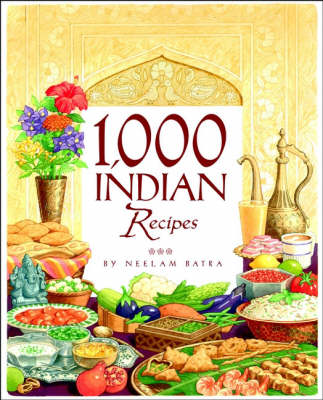
      On that note, I'd like to present my personal Indian cooking bible: 1000 Indian Recipes, by Neelam Batra. I discovered this book about five years ago (long before I was hip to the blogging scene), and have probably used it once or twice a week since then. Well, maybe less often in the past two years or so, because I've memorized so many of the recipes by heart. Anyway, I love it for the following reasons:
      1. The early sections of the book offer lots of information about how to stock an Indian-Cooking friendly kitchen. Chapters include information on basic ingredients and procedures (including making one's own paneer cheese, ghee, and garlic-ginger paste), as well as detailed explanations about the spices used throughout the book and possible substitutions
      2. An intuitive and clear organization with a fabulous index searchable by both the Indian and English words
      3. Um.... 1000 Recipes! One of my life goals is to try them all (except maybe the meat ones).
      A final piece of advice for beginners before we get to the recipe of the day: Do. Not. Buy. Spices. At. The. Grocery. Store.

      Seriously, don't do it. You will get ripped off so severely you will never forgive yourself. Find an Indian Grocery Store, take your 1000 Indian Recipes spice list, and stock up. You will be shocked at how affordable spices are at the Indian Grocery Store, and the prices on dried legumes and flour aren't bad either. The only caveat is that spices do go stale after a bit, so buy smaller containers if you're not planning on cooking Indian regularly. Okay, now you're ready!

      Yogurt Curry  with Onion Pakora
      This recipe is a slight adaption of "Nani Mama's Yogurt Curry with Onion Fritters" in Neelam Bartra's 1000 Indian Recipes. Make the fritters first, and then add them to the curry sauce at the end. The recipe for the pakora precedes the recipe for the yogurt curry sauce. 

      Onion Pakora or Onion Fritters
      Ingredients:
      • 1/2 teaspoon Chaat Masala
      • 1/2 cup chickpea flour (aka gram flour)
      • 1 small onion, finely chopped or minced
      • 1 small potato, peeled and grated
      • 1/2 cup finely chopped cilantro, including soft stems
      • 1 tablespoon peeled and finely chopped fresh ginger
      • 2 teaspoons ground coriander
      • 1 teaspoon dried, ground fenugreek
      • 1/2 teaspoon ground cumin
      • 1/2 teaspoon ground ajwain seeds
      • 1/4 teaspoon baking soda
      • 1 teaspoon salt, or to taste
      • 2 to 3 tablespoons water
      • 1 1/2 to 2 cups of peanut oil for deep-frying
      Directions:
      1. Sift the chickpea flour into a medium bowl and mix in the onion, potato, ginger, coriander, fenugreek, cumin, ajwain seeds, baking soda, and salt. Add the water as needed to make a semi-thick mixture.


      1. Heat the oil to 350F or 375F on a frying thermometer or a small teaspoon of batter dropped into the hot oil bubbles and rises to the top immediately.
      2. Use a tablespoon to drop 1-inch uneven balls of the mixture carefully into the hot oil and fry as many pieces as the wok can hold at one time without crowding, turning each piece a few times with a slotted spoon until crispy and golden on all sides, about 2-3 minutes. Transfer to a paper towel to drain. 
      1. Set aside until it is time to add them to the curry sauce. 


      Yogurt Curry with Onion Pakora
      Ingredients:
      • 15 to 20 Onion Pakora
      • 3 cups nonfat plain yogurt
      • 3 cups water
      • 1/4 cup chickpea flour
      • 1 teaspoon black mustard seeds
      • 1 1/2 tablespoons ground coriander
      • 1/4 teaspoon ground fenugreek
      • 1/8 teaspoon ground asafoetida
      • 1/4 teaspoon ground turmeric
      • 3/4 teaspoon salt, or to taste
      • 3 tablespoons vegetable oil
      • 1/4 cup minced onion
      • 2 tablespoons peeled minced fresh ginger
      • 1 1/2 tablespoons ground coriander
      • Chopped cilantro
      Directions:
      • Prepare the pakoras. Then, in a blender, blend together the yogurt, water, chickpea flour, and curry leaves until smooth. (Blend well, or the yogurt will curdle while cooking.) Transfer to a bowl and mix in the coriander, turmeric, and salt. 
      • Heat 1 1/2 tablespoons oil in a large nonstick wok or saucepan over medium-high heat and cook the onion and ginger, stirring, until golden about 1 minute. Add the black mustard seeds and continue to heat until they begin to pop. 
      • Add the coriander, fenugreek, asafoetida, and tumeric. Stir momentarily. Then slowly add the yogurt mixture, stirring constantly, and continue to stir until it comes to a boil, 2 to 4 minutes. Watch carefully and reduce the heat if the sauce starts to boil over.
      • Reduce the heat to medium-low and simmer, uncovered, stirring occasionally and watching carefully, until the sauce looks smooth and silky and traces of oil are visible on the top of the surface and the sides, 30 to 35 minutes. (At this point the sauce should be somewhat soupy; it will thicken after the pakoras are added.)
      • Add the pakoras and simmer another 3 to 5 minutes, allowing the pakoras to soften as they absorb the sauce. 
      • Transfer to a serving dish, garnish with chipped cilantro. Serve with rice or flat breads. 

      Monday, September 5, 2011

      Hummus: Food of the Vegetable Gods


      Hummus, that old vegetarian staple, is a deceptive dish. It seems simple, right? Garbanzo beans, tahini and what not. But, if you’ve ever tried hummus from one of those grocery store containers; you know it’s not that simple. Some hummus tastes more like wet concrete than the delicious, refreshing spread we all know and love.  Good hummus – really good hummus – is somewhat elusive.

      However, I have a treat for you readers. I’ve found the Apollo of Hummus, and he lives in my apartment. My boyfriend, J, spent his youth slaving away inside the hot kitchen of a Middle Eastern restaurant, and his hummus is by and far the most delicious that I’ve ever tasted. After some serious bribery (read: a case of Corona) I’ve convinced him to share his wisdom on Veggie Horizons.


      J’s Original Hummus
      There’s nothing like an original!

      Ingredients:

      Two Cans Garbanzo Beans, Drained and Rinsed
      2 Large Cloves Garlic, Chopped
      ¼ Cup Extra Virgin Olive Oil
      1/2 Cup Lemon Juice
      2.5 TBS Tahini
      1 TSP Salt


      Directions:
      Combine all ingredients in a food processor, and blend until smooth. Serve with warm pita, veggie crudités, pretzel chips, or anything else you like!


      J’s Hot Hummus
      Add peppers and a tomato for a spicy kick!
      Ingredients:

      Two Cans Garbanzo Beans, Drained and Rinsed
      1 Serrano Pepper, Chopped
      2 Yellow Banana Peppers, Chopped
      2 Large Cloves Garlic, Chopped
      1 Medium Tomato, Chopped
      ¼ Cup Extra Virgin Olive Oil
      1/4 Cup Lemon Juice
      2.5 TBS Tahini
      1 TSP Salt


      Directions:
      Combine all ingredients in a food processor, and blend until smooth. Serve with warm pita, veggie crudités, pretzel chips, or anything else you like! 

      Thursday, August 11, 2011

      An Indian Delight: Sweet Potato Samosas

      Hi everyone!

      I am so sorry I have neglected the blog. I just started a new job and I moved into a new apartment last weekend. Things have been crazy, but I have still been thinking about the blog!

      The best thing about being in the new apartment is the fabulous kitchen. It is the biggest, newest, and cleanest kitchen I have ever had in an apartment. So I have been taking full advantage of it.

      One of my first projects was to try a recipe I saw on Veggie Belly a month or so ago and have not had the resources to try: sweet potato samosas. I have never been a huge Indian food fan, but I absolutely love samosas. Any time I find myself in an Indian restaurant, I am guaranteed to order samosas. So I was thrilled to discover this recipe because I also love sweet potatoes.

      Photo courtesy of Veggie Belly


      The recipe is by no means "easy," but it definitely wasn't the most difficult recipe I have ever attempted. The most important tips I have? Line up all of your ingredients and spices prior to beginning. Don't forget to thaw the puff pastry (which, by the way, I have fallen in love with and plan on trying to use for new recipes like homemade croissants.) I didn't put them on sticks because, frankly, I forgot to buy sticks at the grocery store, but I actually enjoyed making them a tad bigger and nixing the sticks.

      I served my samosas with a green bean salad I wrote about earlier. It was DELICIOUS, and amazing as lunches for the rest of the week.


      my sweet potato samosas and green bean salad

      The recipe, straight from the mouth of Veggie Belly:

      Sweet Potato Samosa Pops Recipe
      Makes 20 pops


      1 large Sweet potato (substitute with regular potato or ¾ cup peeled, cooked butternut squash or pumpkin)

      1 tablespoon vegetable oil

      ¼ teaspoon cumin seeds

      1 small onion, finely chopped

      1/2 tablespoon minced garlic

      ½ tablespoon minced ginger

      ¼ teaspoon turmeric powder

      ¼ teaspoon, or to taste red chile powder

      ¼ teaspoon coriander powder

      ¼ teaspoon garam masala

      1/8 teaspoon aam choor or mango powder (substitute with 1/2 teaspoon lime juice)

      1 tablespoon chopped cilantro

      Salt

      2 sheets of puff pastry, thawed for about 30 minutes.

      1 egg (vegans leave this out)

      1 tablespoon milk (vegans leave this out)

      20 six inch lollipop sticks (I used ‘Candymaker’ brand; it is oven-safe)

      Pre heat oven to 400f

      Wrap the sweet potato in a paper towel and microwave on high for about 4 minutes or till the sweet potato is cooked through. When it is cool enough to handle, peel the skin and lightly mash.This is the easiest way to cook and prepare a sweet potato for this recipe. Alternatively, you could peel, cube, and boil the sweet potato in water till tender. You need about 3/4th cup of cooked and peeled sweet potato.

      While the sweet potato is cooking, heat the oil in a medium sauce pan. Add cumin seeds. When they start to sizzle, add the chooped onion and cook on medium heat till onions are lightly browned. Then add the ginger and garlic and cook for about a minute. Add turmeric, chilli, coriander powders, garam masala, and aam choor. Stir for about 30 seconds, taking care not to burn the spice powders. Turn off heat. Add the mashed sweet potato, cilantro and salt. Mix well. Taste and adjust salt and seasonings.

      Lay out the thawed puff pastry on a clean work top. Measure out 2 inch squares. Using a sharp knife, cut the puff pastry sheets into 2 inch squares. You should have about 40 squares.

      (If you have any odd sized bits of puff pastry left over after cutting, simply bake the scraps without filling, along with the rest of the samosas. You can snack on these!)

      Press a lollipop stick onto the center of 20 of the squares. Mound 1 teaspoon of the sweet potato filling on top of the squares with the lollipop sticks. Don’t over fill.

      Cover these with the other 20 squares of puff pastry. Gently stretch them a little so they fit over the filling mound. Using the tines of a small fork, press down and seal all the edges. Make sure they are sealed well. (Look at photos above).

      (If you wish to freeze the samosa pops, you can do so at this point. Lay out the samosa pops on a single layer and place in the freezer. Once they are frozen hard, remove the samosa pops and put them in a zip lock bag, and return to the freezer for future use.)

      Lay the samosa pops on a baking sheet lined with parchment paper or a silicone baking mat. Whisk together the egg and milk in a small bowl. Brush this egg wash over the samosas. Bake in a 400f oven, for 15 minutes or till puff pastry is golden.

      Photo courtesy of Veggie Belly